China has become a major sourcing base for Derust Lubricating Spray, serving automotive repair, industrial maintenance, marine equipment, hardware, and household applications. However, choosing a manufacturer requires more than comparing prices or checking online product photos. Buyers should examine formulation stability, aerosol filling accuracy, corrosion protection tests, lubrication performance, packaging quality, and production consistency.
“Tribology is the science and engineering of interacting surfaces in relative motion,” explains Dr. Bharat Bhushan, a respected tribology researcher. His statement reflects the real purpose of Derust Lubricating Spray. The product must loosen rust while reducing friction between moving metal surfaces. A reliable spray should penetrate narrow threads, hinges, bearings, locks, and exposed fasteners. It should also leave a protective film without excessive dripping or an unpleasantly persistent residue.
The strongest Chinese manufacturers usually provide technical data sheets, batch records, safety documentation, and sample testing before large orders. Some operate automated filling lines, while others rely heavily on manual inspection. That difference matters. One poorly sealed can may leak inside a shipment. A weak nozzle may produce an uneven stream. These details are easy to overlook.
Our review will compare leading Derust Lubricating Spray manufacturers in China through practical purchasing criteria. We will consider factory capability, private-label support, export experience, formulation options, quality control, and customer communication. Certification alone is not enough. Product performance must be tested.
There is room for uncertainty. Rust conditions vary widely, and laboratory results cannot fully predict field performance. A careful buyer should test samples on real bolts, hinges, tools, and machinery before approving a long-term supplier.
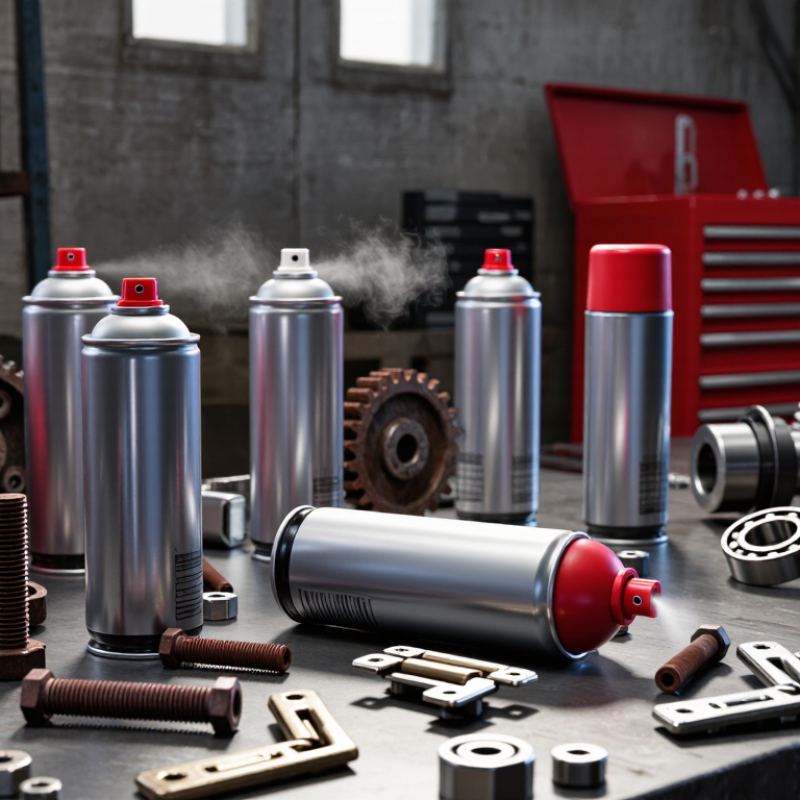
Derust lubricating spray is a penetrating product designed to loosen rusted metal parts while reducing friction. It usually contains a thin carrier that can seep into narrow gaps, along with lubricating ingredients that help moving surfaces slide. When sprayed around a seized bolt or hinge, the liquid travels along the metal joint through capillary action. This gradual penetration helps weaken the grip of rust and dried residue. Give it time. A few minutes may help with light corrosion, while stubborn parts can need repeated applications and a longer wait.
For a stuck fastener, brush away loose rust, apply the spray to the joint, and let it soak before turning the part gently with a suitable tool. Forcing it can round the fastener or break it. Wipe away excess liquid, especially where a clean surface is needed for painting or bonding. Results vary with the product, the metal, and the severity of corrosion; spray cannot rebuild metal already eaten away by rust. I have also found that applying more is not always better. Use good ventilation, keep the spray away from flames, and follow the label’s handling instructions.
China’s role as a major producer of derusting lubricating sprays rests on industrial depth, not one special formula. UNIDO’s International Yearbook of Industrial Statistics 2024 estimates that China generated about 31.8% of global manufacturing value added in 2022. That scale links metalworking, chemical supply, can production, and filling operations across established industrial regions. For spray makers, nearby suppliers can make it easier to source components and adjust production. It also supports practical testing of corrosion removal, protective film, spray pattern, and valve performance. Small details matter.
The National Bureau of Statistics of China reported that manufacturing investment grew 6.5% in 2023, while high-tech manufacturing investment rose 9.9%. These figures describe broader industrial capacity, not derusting spray output specifically. That distinction matters. A large manufacturing base does not guarantee consistent product quality. Buyers should still review test methods, batch records, packaging checks, and performance under damp storage conditions. A thin film can look convincing on a clean workshop bench, yet fail after weeks near humid machinery. More production capacity helps, but dependable results still require careful formulation and verification.
When comparing Chinese manufacturers of derusting lubricating sprays, look beyond claims such as “fast acting.” Check whether the product is designed to loosen rust, displace moisture, lubricate moving parts, or provide short-term protection after cleaning. These functions can vary between formulas. Ask for technical data, safety information, and test conditions, including the metal type, exposure time, and corrosion test method.
Test samples on similar rusty fasteners before placing a large order. Note how the spray reaches a narrow seam, how long the part needs to sit, and whether residue remains after wiping. A tidy spec sheet can still mislead. That matters. Compare nozzle control and spray consistency, too; a narrow stream may suit hinges, while broader coverage helps with larger surfaces.
Check can size, fill weight, valve performance, and leakage rates in production records. Also confirm compatibility with painted surfaces, plastics, and rubber seals, since some solvents may affect them. Ask how batches are checked and whether test results are available for the exact product, not just a similar formula. Strong penetration may come with an oily film that needs extra cleanup. There is no perfect trade-off.
Top Derust Lubricating Spray Manufacturers in China
Choosing a derust lubricating spray manufacturer in China takes more than comparing product photos. Reliable suppliers should explain how their formulas loosen rust, reduce friction, and protect exposed metal. Ask for technical data, application instructions, and storage guidance. Clear answers matter.
Look for practical quality controls, such as checks on fill volume, spray performance, and batch consistency. Request samples and test them on rusty bolts, hinges, or workshop tools. Note how quickly the product penetrates and whether it leaves an oily film. Small details count. A polished catalog is not proof. I would also ask how the manufacturer handles formula changes, since the answer may reveal gaps in its process.
Export experience, responsive technical support, and transparent production information can help distinguish established manufacturers from simple trading operations. Confirm that the supplier can provide current safety documentation and product specifications for your intended market. Avoid judging a factory by price alone; a low quote may leave packaging, testing, or support unclear. No single supplier fits every use. Compare evidence, not promises, and keep your own test notes before placing a large order.
| Evaluation Dimension | What to Verify | Useful Evidence | Buyer Check |
|---|---|---|---|
| Product formulation | Whether the product is designed to loosen rusted parts, displace moisture, lubricate moving parts, or provide temporary corrosion protection. These functions can vary by formulation. | Technical data sheet (TDS), stated intended uses, and test methods supporting performance claims. | Match the stated functions to the application; do not assume every penetrating spray provides long-term corrosion protection. |
| Performance testing | How penetration, lubrication, moisture displacement, and corrosion protection are assessed. | Test reports that identify the method, conditions, sample details, and results. | Compare products only when the test methods and conditions are comparable. |
| Safety documentation | Hazard classification, handling precautions, first aid, storage requirements, and transport information. | Current Safety Data Sheet (SDS) and product label for the intended market. | Confirm the SDS and label correspond to the exact formulation and packaging being purchased. |
| Aerosol packaging | Can construction, valve and actuator compatibility, spray pattern, and leak-control procedures. | Packaging specifications, filling-line quality records, and sample cans for evaluation. | Check spray consistency, valve operation, leakage, and packaging integrity on production-representative samples. |
| Quality management | Documented controls for incoming materials, batch production, filling, inspection, and traceability. | Quality-system documentation, batch records, inspection plans, and corrective-action procedures. | Verify that batch identification and a process for handling nonconforming products are in place. |
| Production capability | Ability to meet the requested formulation, can size, labeling, order quantity, and delivery schedule. | Written production specifications, capacity information, lead-time commitments, and sample approval records. | Confirm capacity and lead time for the specific order rather than relying on general claims. |
| Regulatory and export readiness | Whether product documentation, labeling, and dangerous-goods shipping arrangements meet the destination market’s requirements. | Market-specific compliance documents, label artwork, and applicable transport documentation. | Check requirements for the destination country and shipping route before placing an order. |
| Customization and support | Availability of private-label packaging, language-specific labels, technical support, and change control. | Approved artwork, written specifications, sample sign-off, and documented change-notification terms. | Ensure that approved product and packaging details are recorded in the purchase agreement. |
Selecting a Chinese derust lubricating spray supplier requires more than comparing prices. Ask for a current technical data sheet, safety data sheet, batch-level inspection records, and clear ingredient and packaging specifications. Check whether the spray loosens rusted fasteners, leaves a consistent protective film, and works with the metals and finishes you use. Request samples from production, not specially prepared showroom stock. A polished catalog proves little.
The World Bank’s 2023 Logistics Performance Index ranked China 19th among 139 economies, with a score of 3.7 out of 5. This is useful context for logistics, not proof of any factory’s reliability. Assess each supplier directly: review its quality-control process, traceability, complaint handling, and export packaging. For corrosion claims, agree on a documented test method, such as ASTM B117 salt-spray testing, and confirm exposure time and acceptance criteria in writing. Small details matter. A missing batch code can complicate a real quality investigation.
Tips: Compare three samples using the same rusty bolt, application distance, and waiting time. Photograph results under consistent lighting, then check residue and movement. Ask for a live factory audit or independent inspection when order volume justifies it. I would not rely on one test alone; workshop conditions vary.
It is a penetrating liquid that loosens rusted metal joints and reduces friction. It can creep into narrow gaps around bolts and hinges. Give it time.
Brush away loose rust, spray the joint, and let it soak. Turn the bolt gently with a suitable tool. Forcing it may damage the fastener.
Light corrosion may respond within minutes. Stubborn parts may need repeated applications and a longer wait. Results vary.
No. It may loosen rust and help parts move, but it cannot replace metal already eaten away by corrosion.
Ask for current technical and safety data sheets, product specifications, packaging details, and batch inspection records. Clear answers matter.
Test samples on similar rusty bolts using the same spray distance and waiting time. Photograph the results under consistent lighting, then check movement and residue. Small details count.
Not by themselves. Agree on a controlled test, its exposure time, and written acceptance criteria. Workshop conditions vary, so one test may not tell the whole story.
Review batch traceability, complaint handling, export packaging, and quality controls. A live audit or independent inspection may help for larger orders. I might give too much weight to a polished sample; production batches matter more.
Derust Lubricating Spray is designed to loosen rusted parts while adding lubrication to help reduce friction and protect metal surfaces. Its effectiveness depends on factors such as penetration, drying behavior, corrosion protection, and compatibility with the materials being treated. China has become a major producer thanks to its extensive manufacturing capacity, established aerosol-packaging supply chains, and ability to offer products in varied formulations and package sizes.
When comparing Chinese manufacturers, buyers should consider performance consistency, ingredient and safety documentation, packaging quality, production capacity, customization options, and quality-control procedures. Rather than choosing on price alone, evaluate samples against clear requirements and confirm that specifications match the intended application. A reliable supplier should communicate transparently, provide traceable product information, meet agreed quality standards, and offer dependable delivery and after-sales support. Careful assessment helps buyers select a suitable Derust Lubricating Spray and build a stable, long-term supply relationship.

ClanZhao